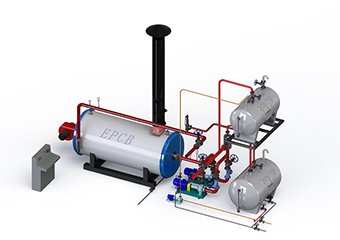
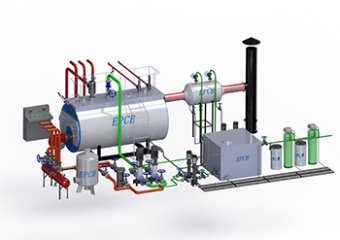
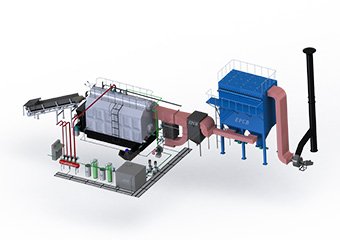
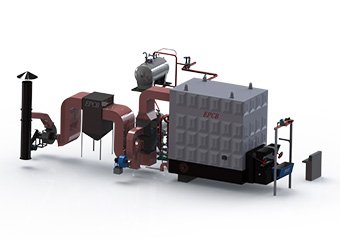
EPCB Boiler is a professional boiler manufacturer in China. Focus on industrial boiler production and sales for 68 years. Our main products are coal-fired boilers, oil gas boilers, biomass boilers, electric boilers, and power plant boilers.

Industrial steam selection is more reliable when engineers distinguish between steam's thermodynamic state, quality, and cleanliness. At EPCB, we build custom industrial biomass boilers. We clarify steam needs early to prevent using wrong-sized equipment and avoid reliability risks. Many operators call any visible white plume "steam." However, this plume usually contains condensed water droplets, not invisible water vapor.
This guide explains the main steam states industry uses. It also covers the practical categories for steam cleanliness in process contact decisions. The goal is a clear workflow. It matches steam behavior to heating, power, sanitation, and regulated-contact uses without getting lost in unrelated boiler theory.
In industrial settings, steam is water vapor used to carry heat energy from a boiler to a process. Steam is valuable in plants because it transfers heat well when it condenses at the point of use. We define the use point first, as one boiler can meet very different steam needs across a site.
Pressure and temperature relationships shape how steam behaves. Yet, distribution conditions often decide what arrives at the valve. Long pipes, poor insulation, and bad condensate removal can alter steam quality before it reaches a heat exchanger or turbine. To prevent confusion, we treat "generation conditions" and "delivered conditions" as separate specs.
![]()
Industrial steam descriptions are more consistent when teams name the thermodynamic state first. Then, they add quality terms that describe moisture content. A common mix-up is thinking "wet" and "dry" are states. They are not. "Wet" and "dry" describe quality, while "saturated" and "superheated" describe the state. Our EPCB quotes are processed faster when a steam request is a controlled spec, not a loose label.
Saturated steam is steam at its boiling point for a given pressure. This means you can infer its temperature from its pressure, which is useful for control loops. It allows for precise temperature control in heating processes because adjusting the pressure creates a predictable saturation temperature. We usually recommend saturated steam for heat exchangers, cooking, process heating, and many sterilization tasks.
Saturated steam can be delivered "dry enough" for heating. However, steam dryness is a deliverable condition, not a guarantee. Steam traps, separators, insulation, and condensate return systems determine if saturated steam arrives with low moisture. We check distribution assumptions before we approve a final steam balance.
Superheated steam is heated above its saturation temperature at a given pressure. So, pressure no longer dictates temperature. This steam is ideal for turbines and other expansion equipment. The extra heat reduces the chance of condensation during expansion. We check superheated steam requests against the process's real temperature sensitivity, as uncontrolled superheat can cause process changes.
For direct heating, superheated steam is often less efficient than saturated steam. It must cool to saturation before its main heat transfer through condensation can begin. Heat exchanger surface area and control strategy may need changes if a heating task gets superheated steam. We prevent slow heating and uneven product temperature by matching the steam state to the heat transfer method.
Wet steam is a saturated steam mix containing liquid water droplets. Many guides also call this unsaturated steam. Wet steam lowers effective heat transfer. It can also increase the risk of corrosion, erosion, and water hammer if condensate management is poor. We see wet steam as a distribution and separation problem to fix, not a target steam type.
Wet steam causes trouble because the liquid water takes up space without providing the same phase-change energy as vapor. Droplets can damage control valves, elbows, and turbine parts. Wet conditions can also make process temperatures uneven. We focus on separators, trap selection, and piping to reduce moisture at the point of use.
In plant terms, dry steam usually means steam with very little free liquid water at the point of use. It is not a separate thermodynamic state. Dry saturated steam is saturated steam delivered near the saturation point with almost no moisture. We use "dry" as a quality target for heating and sterilization. Moisture carryover creates unpredictable heat transfer and equipment risks.
Dryness should be treated as a verified result, since 100% dryness is hard to maintain across real distribution networks. Heat loss and pressure drops can cause local condensation, even with good boiler outlet steam quality. We prevent spec errors by stating where dryness is needed and what distribution controls will protect it.
![]()
Steam quality management protects safety and energy performance. It involves controlling moisture, condensate removal, and gas content at delivery points. We check steam quality at the use point because boiler outlet quality doesn't guarantee delivered quality after long pipe runs. Poor steam quality can lead to water hammer, unstable temperatures, and extra maintenance.
Dryness fraction describes how much of a saturated mixture is vapor versus liquid. This concept links directly to usable energy. Higher vapor quality supports better heating performance because more latent heat is available as the liquid fraction drops. We recommend site testing when a process is sensitive.
Noncondensable gases can reduce heat transfer in sterilizers and other closed heating spaces. These gases take up volume without the heat release from condensation. You should check gas limits, dryness needs, and allowable superheat against your facility's validation rules. We separate "clean steam generation" from "sterilizer performance" to keep responsibilities clear.
We confirm the use case and heat transfer method.
We confirm delivered pressure at the use point.
We confirm condensate handling design and trap strategy.
We confirm if cleanliness requires filtration or limits.
![]()
Steam cleanliness categories help plants decide if steam can touch products, food surfaces, or critical equipment without contamination risk. We separate cleanliness from the thermodynamic state. Saturated steam can be either utility steam or clean steam, depending on feedwater quality and chemical treatments. A clear label reduces arguments during commissioning and audits.
Utility steam is the typical plant steam used for indirect heating, space heating, and general process energy. It often has boiler chemicals, so direct product contact is usually avoided. We ask where the steam goes and what the condensate touches. "Utility steam" can be safe in one loop but not another.
Many facilities also label utility steam by pressure bands, like low, medium, and high pressure. These definitions vary by industry and site. Utility steam may also need filtration to remove rust and other contaminants in sensitive equipment. We match filtration needs to the risk of fouling at the end device.
Filtered steam is utility steam that passes through filters to reduce particulates and contaminants. It is often used when direct contact is still avoided but equipment sensitivity is high, such as in certain sterilization support tasks. We see filtered steam as a risk-reduction step, not a guarantee of compliance for regulated contact.
Filtered steam decisions must include filter maintenance and monitoring. The filter's condition can change over time. Upstream rust sources can overload filters if pipework problems are not fixed. We prevent false confidence by linking filtered steam needs to a maintenance plan.
Culinary steam is steam suitable for food processing where it may contact food surfaces under defined rules. It usually requires controls on additives, filtration, and documentation. This shows an acceptable contamination risk for the location and facility. Food-contact requirements depend on local rules and plant compliance programs.
Culinary steam often uses saturated steam because it supports predictable temperature control in cooking and sanitation. The main engineering difference is not physics, but contamination control and verification. We check feedwater treatment and filter choices early when culinary steam is requested.
Clean or pure steam is made from high-purity feedwater without contaminating additives. It is for uses where direct contact or validated cleanliness is needed. These systems often require specific materials, piping, and sampling that align with facility validation needs. We treat clean steam as a full system design problem.
Clean steam is often saturated at the point of use. This supports predictable condensation heat transfer and sterilization. The critical variables become delivered cleanliness, dryness, and gas content. We recommend plants define their acceptance criteria with QA and validation teams before choosing equipment.
![]()
Steam selection becomes practical when teams decide based on temperature control, heat transfer, distance losses, and contact risk. We compare the process duty against steam behavior. Then, we verify what the distribution network can deliver at peak load. EPCB projects move faster when the steam request includes state, cleanliness, and delivery conditions.
Saturated steam is common for heating because its pressure-based temperature control gives repeatable results. Superheated steam is often chosen for turbines because condensation risk during expansion must be low. We prevent misapplication by focusing on the primary failure mode, whether it is slow heating, temperature overshoot, corrosion, erosion, or audit issues.
Requesting "dry steam" without stating if the need is for moisture control or cleanliness.
Specifying boiler outlet conditions but never measuring delivered conditions.
Assuming utility steam is fine for contact tasks without a defined compliance program.
Industrial steam generation decisions stay consistent when teams specify steam state, quality, and cleanliness as separate needs. At EPCB, we translate process needs into a steam spec. This includes delivery pressure, moisture control methods, and contact-risk class before we finalize a biomass boiler design. A disciplined spec avoids wasted fuel, unstable production, and preventable equipment damage.
For an accurate steam recommendation from our team, we need to know the use case, required delivery pressure, distance and insulation of the steam main, and whether steam will contact the product. We also need to know if site validation rules define dryness or gas limits. We use these inputs to separate boiler selection from distribution fixes so a plant can improve performance without guessing.
Guides describe saturated and superheated steam as the two main states, with dry and wet as quality descriptors. Plants also classify steam by cleanliness, such as utility, filtered, culinary, and clean steam. The best label depends on the task: heating, power, sanitation, or regulated contact.
Saturated steam is at the boiling point for its pressure, so pressure implies temperature. Superheated steam is above that point, so pressure does not fix temperature. Heating often uses saturated steam, while turbines need superheated steam to reduce condensation risk.
Dry steam has minimal liquid water at the use point. Wet steam contains entrained liquid droplets. Wet conditions increase erosion, corrosion, and water hammer risk. Good moisture control hardware and condensate handling are important.
Dryness fraction describes how much of a saturated mixture is vapor versus liquid. Higher vapor quality supports better energy transfer for heating because more latent heat is available as the liquid fraction decreases. You should verify measurement and acceptance criteria for sensitive processes.
Utility steam fits indirect heating loads where direct product contact is not allowed. Clean or pure steam is for when contact risk, sanitation, or validation needs require higher control of additives and contaminants. The choice should align with the facility's compliance program and end-use scenario.
Superheated steam can heat a process, but performance often changes. It must cool to saturation before condensation-driven heat transfer begins. Controls and heat transfer area may need changes to avoid slow heating or unstable temperatures. A site should verify if these changes are acceptable before switching.
Send You Inquiry
Give You Boiler Solution
Place The Order
Get Your Boiler